Swimming To Support Cruciate Ligament Recovery
For owners of dogs recovering from cruciate ligament injury or surgery, looking for vet-approved exercise options.
A torn cruciate ligament is one of the most common reasons a dog ends up needing an extended period of controlled exercise. Whether the treatment path is surgical or managed conservatively, the recovery phase usually involves rebuilding strength and confidence in the affected leg without putting it under the kind of load that caused the original injury.
Swimming is often mentioned by vets and physios as part of that rebuilding process, because water removes much of the weight-bearing load while still letting the leg move. This guide explains why that matters, what a recovery-focused swim session looks like, and the vet clearance you need before booking one.
Nothing here replaces advice from your vet or physiotherapist — always confirm your dog is cleared for water-based exercise, and follow their guidance on timing and intensity.
Key points
- Always get vet or physio clearance before swimming during cruciate recovery.
- Buoyancy reduces load on the repaired or healing joint while still allowing movement.
- Sessions are private and paced to your dog, not run as a fixed group programme.
Why water is often recommended after cruciate injury
The stifle (knee) joint bears a significant amount of a dog's body weight during normal walking and running. After a cruciate tear or repair, that load needs to be reintroduced gradually, and land-based exercise makes it difficult to control precisely how much weight goes through the joint at any given moment.
In water, buoyancy takes a large share of that weight away, meaning the leg can move through a fuller range without carrying the dog's full bodyweight. This is why swimming and hydrotherapy come up so often in cruciate rehabilitation plans.
Getting clearance before you book
Timing matters enormously with cruciate recovery — swimming too soon after surgery can do more harm than good, while the right timing can support the rebuilding of muscle around the joint. Your vet or physio will tell you when swimming becomes appropriate for your dog's specific case and how long the sessions should be.
When you book, let us know the surgery date (or diagnosis date if managed conservatively) and any specific instructions from your vet, so we can tailor the session to what you have been advised.
What a recovery-focused session looks like
These sessions are typically gentler and more closely supervised than a general fitness swim. We use short bursts of movement with plenty of rest, rather than a continuous 30-minute swim, particularly in the earlier stages of recovery.
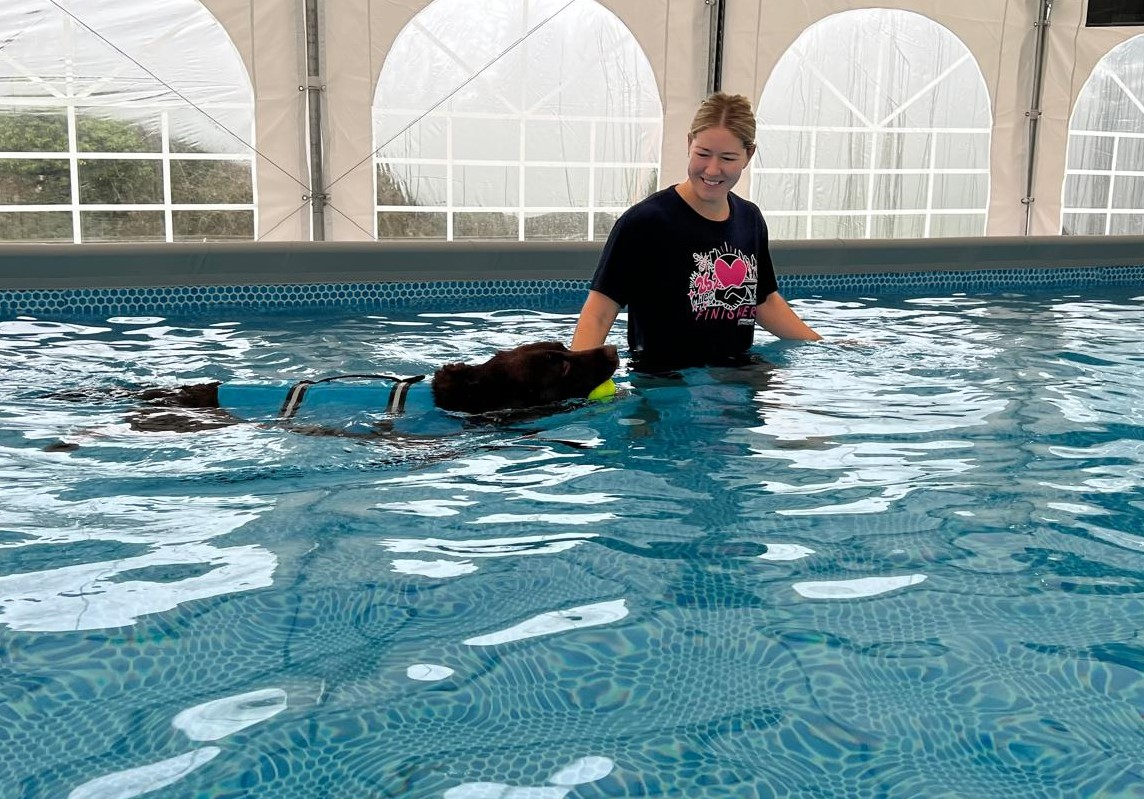
Swim Coach is the session most owners choose for this, since one of our team is in the water with your dog throughout, able to support the affected leg and watch how it is being used. Owner In Pool is also an option if you would prefer to be the one supporting your dog directly.
Signs to watch for during and after a session
You know your dog's normal movement pattern better than anyone. Watch for any obvious favouring of the leg, reluctance to bear weight after leaving the pool, or unusual stiffness the following day, and report anything that concerns you back to your vet.
- Uneven use of the affected leg compared with the others.
- Reluctance to weight-bear once out of the water.
- Increased stiffness or lameness in the 24 hours after a swim.
- Excessive tiredness that goes beyond normal post-swim sleepiness.
Building a session pattern over time
Many owners begin with shorter, gentler sessions and gradually increase what their dog does in the water as strength returns, always in line with vet or physio guidance. Because there is no membership or minimum block here, you can space sessions out exactly as recommended — weekly, fortnightly, or however your recovery plan is structured.
As your dog progresses beyond the recovery phase, some owners move on to Weighty Woofers or Group Classes for ongoing conditioning, once cleared to do so.
What we need to know before your dog's first recovery session
A short conversation before booking helps us prepare properly: which leg was affected, whether it was surgical or conservative management, how long ago the injury or operation was, and any specific restrictions your vet has given. Bring any paperwork from your vet or physio along on the day if you have it.
Common questions
How soon after cruciate surgery can a dog swim?
This varies by dog and by procedure, so it must be decided by your vet or physio. Do not book a swim during recovery without their clearance and guidance on timing.
Which session is best for cruciate recovery?
Swim Coach is the most commonly chosen option, as one of our team is in the water supporting your dog throughout the session.
Will swimming replace physiotherapy exercises?
No. Swimming can complement a physiotherapy plan but should be used alongside, not instead of, whatever land-based exercises your vet or physio has prescribed.
What should I tell you before booking a recovery session?
Let us know which leg was affected, whether surgery was involved, how long ago, and any restrictions or advice from your vet or physio.
Is the water too warm or cold to matter for a healing joint?
Our pool is maintained between 28 and 32°C, warm enough to encourage relaxed movement rather than muscle tensing, which many recovering dogs find more comfortable than cold water.
Book a vet-cleared recovery swim
Call 07359 881320 to talk through your dog's cruciate recovery before booking a Swim Coach session.
What Happens Next?
- 1. We review your enquiry
- 2. We call or text to confirm
- 3. Bring your dog and a towel!
Related guides
Swimming after surgery
For owners whose dog is recovering from an operation.
Use caseSwimming for hip dysplasia
For owners of dogs diagnosed with hip dysplasia considering swimming as part of ongoing management.
Use caseExercise for arthritic dogs
For owners of dogs with arthritis looking for lower-impact ways to keep them moving.