Dog Hydrotherapy Explained, Step By Step
For owners who have heard the term and want a clear, jargon-free explanation.
"Hydrotherapy" can sound clinical, and owners sometimes picture something closer to a hospital treatment than an actual dog swimming in a pool. In reality, at a facility like ours it is a private, low-key session in warm water, built around your dog's ability on the day rather than a fixed programme.
This guide breaks down exactly what happens from the moment you arrive to the moment you leave with a warm, dry dog, along with the equipment involved and the terms you are likely to come across when researching it.
Key points
- Hydrotherapy sessions here are private 30-minute slots in an indoor heated pool.
- Buoyancy aids, ramps and floats are used to support dogs of any confidence level.
- Every session ends with a full towel-down and hair-dryer before you leave.
The pool itself
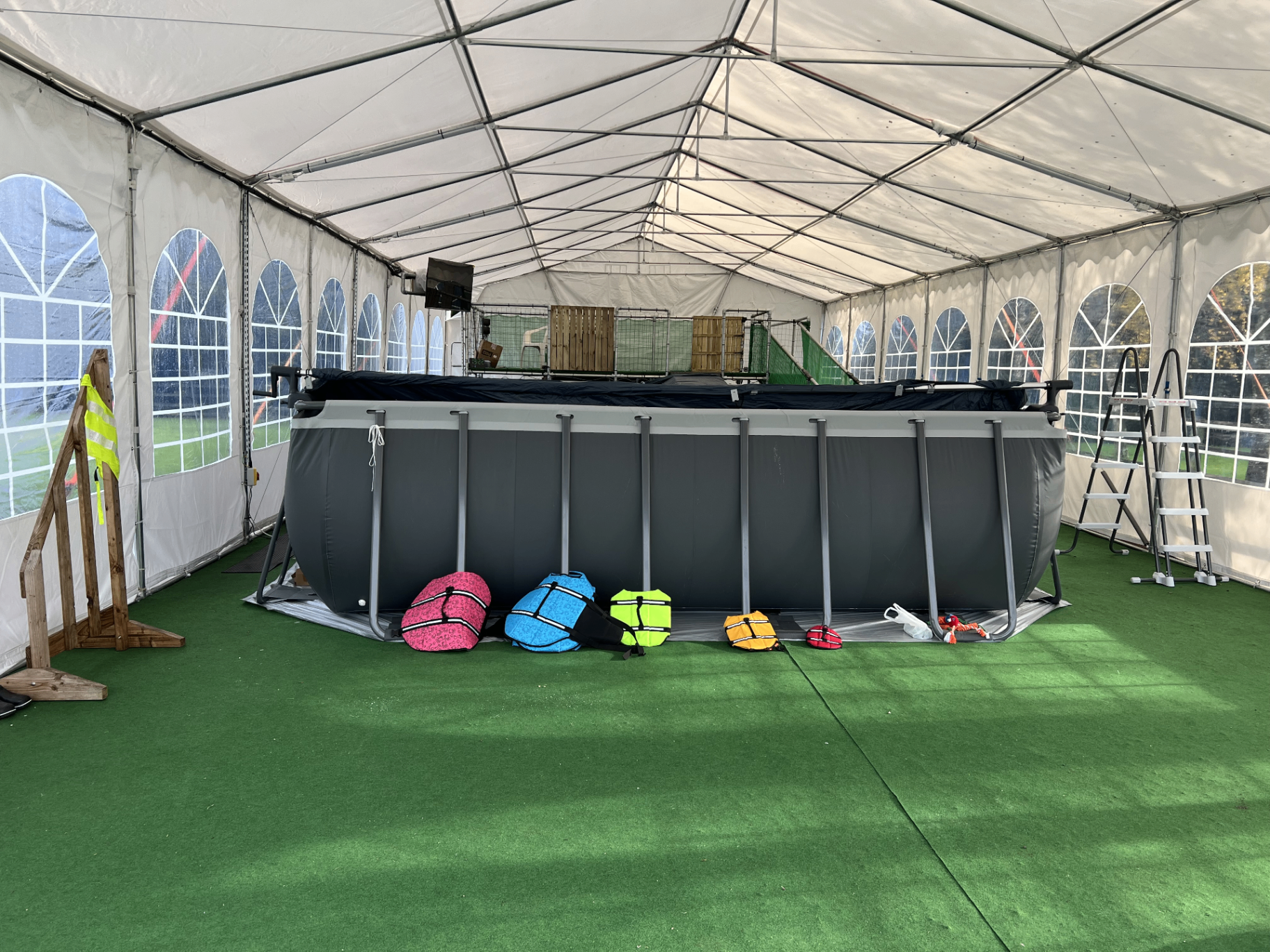
Our pool is housed indoors within a marquee at Pompian Brow Farm in Bretherton, so sessions run whatever the weather is doing outside. The water is kept between 28 and 32°C year-round, which is the range most owners and their dogs find comfortable for sustained movement.
Access is via a ramp rather than a jump or a step-ladder, which matters for older dogs, nervous dogs and anything recovering from injury — there is no requirement to leap in.
Before the water: the conversation
Every session starts with a short chat about your dog — their history, confidence around water, any current injuries, and what you are hoping the session achieves. This is the point to mention any vet advice you have received, particularly if your dog is post-surgery or has a diagnosed condition.
It is also where we agree what kind of session suits your dog: getting in the water yourself, having one of our team support them, or a more sociable group setting.
Equipment used during a session
A fitted buoyancy aid is used for dogs who need extra support, particularly first-timers, heavier dogs, or dogs with weakness in the hind end. Floats and toys are used to encourage movement and keep the session engaging rather than repetitive.
- Buoyancy aids fitted to the individual dog, not a generic size.
- Floats and toys to encourage active swimming.
- A ramp for calm, unforced entry and exit.
During the 30 minutes
The session is broken up rather than one continuous swim, particularly for dogs new to the pool or working on recovery. Short bursts of movement with rest in between let a dog build effort gradually instead of exhausting itself in the first five minutes.
On Swim Coach sessions, a member of our team stays in the water with your dog throughout, adjusting support as needed. On Owner In Pool sessions, you take that role yourself, which many dogs respond well to because it is their own person guiding them.
After the water
Your dog gets a proper towel-down followed by time with the hair-dryer, so they are not left cold or dripping on the way home. Ears are dried as part of this, which matters for breeds prone to ear issues.
Expect your dog to be tired afterwards — hydrotherapy uses muscles that a normal walk does not, and a good night's sleep is a common and expected outcome.
Terms you might come across
You may see other providers use terms like "underwater treadmill", "aquatic therapy" or "canine rehabilitation". At our pool, sessions are straightforward free-swim hydrotherapy in an open pool rather than a treadmill setup, which suits most dogs coming for general conditioning, weight management or gentle recovery support.
Choosing which session type to book
Owner In Pool and Swim Coach are the two most common starting points for hydrotherapy-focused visits, since both offer a fully private, supported environment. Weighty Woofers is worth considering if weight loss is a specific goal, as it includes a free weigh-in every session to track progress.
Who tends to benefit from this kind of session
Hydrotherapy in this format suits a wide range of dogs: those building fitness after a quiet period, dogs carrying extra weight who need lower-impact exercise, older dogs with stiffer joints, and confident dogs who simply enjoy the water and benefit from an additional outlet for energy.
It also suits nervous dogs well, precisely because sessions are private rather than shared. There is no other dog to react to and no audience watching, which lets a wary dog build confidence at its own pace across a few visits rather than one all-or-nothing attempt.
Common questions
Is a vet referral needed before a hydrotherapy session?
No referral is required to book, but vet clearance is strongly advised for any dog recovering from surgery or with a diagnosed condition.
Is the pool shared with other dogs?
Sessions are private 30-minute slots, except Group Classes, which are a sociable swim alongside other friendly dogs by design.
What if my dog has never been in water before?
That is common. Entry is via a ramp at your dog's own pace, with buoyancy aids and toys used to build confidence rather than force anything.
How is the water kept warm?
The pool is indoors within a heated marquee and the water is maintained between 28 and 32°C throughout the year.
Do you dry my dog afterwards?
Yes. Every session ends with a towel-down and time with the hair-dryer before you head home.
See hydrotherapy in action
Book a private 30-minute session and we'll talk you through every step on arrival.
What Happens Next?
- 1. We review your enquiry
- 2. We call or text to confirm
- 3. Bring your dog and a towel!
Related guides
Why hydrotherapy helps dogs
For owners researching whether warm-water exercise could help their dog.
ProcessYour first session, step by step
For owners who have booked, or are about to, and want to know exactly how the session runs.
PreparationSafety checklist
For owners who want to know the risks and how they are managed.