How To Introduce A Puppy To Water
For owners with a young puppy who has never been swimming and want the first exposure to go well.
A puppy's first experience of water shapes how they feel about it for years afterwards. Rush it, and you can create a nervous swimmer. Take it slowly and let them set the pace, and most puppies come to see the pool as one of the better parts of their week.
The good news is that a controlled, warm, private pool is about as gentle an introduction as you can find. There is no cold canal, no unpredictable current and no audience of other dogs to worry about — just a ramp, warm water and time.
This guide walks through how we introduce puppies to water in our Bretherton pool, and what you can do at home beforehand to make that first session easier.
Key points
- Let a puppy approach water at their own pace — never lift or push them in.
- The ramp entry lets a puppy walk in a paw at a time rather than being dropped into deep water.
- Keep first sessions short; a five-minute paddle that ends happily is worth more than a long session that ends in stress.
Why the first introduction matters
Puppies are absorbing information about the world constantly, and a bad first experience with water — a fright, a cold shock, being forced in — can create a lasting association that takes far longer to undo than it took to create. A calm, unpressured first swim, by contrast, tends to build genuine confidence.
This is one of the reasons a controlled indoor pool works better as a first exposure than a river, the sea or even a garden paddling pool. There is no current, no cold shock and no distractions — just warm water and space to explore it slowly.
Before you arrive
A short walk and toilet break before you come in helps a puppy settle. Avoid a full meal right beforehand — a light one a couple of hours earlier is plenty. Bring their normal lead and, if you plan to get in the water with them, your own swimwear and towel.
It also helps to mention your puppy's age, any vaccination status, and their general temperament when you book, so we can plan the pace of the session around them specifically.
Settling in before the water
We spend a couple of minutes with every new dog before they go anywhere near the pool, letting them sniff around the room and get used to the sound of the water and the general environment. For a puppy this matters even more than for an adult dog — a calm few minutes here often saves a lot of hesitation later.
The ramp entry
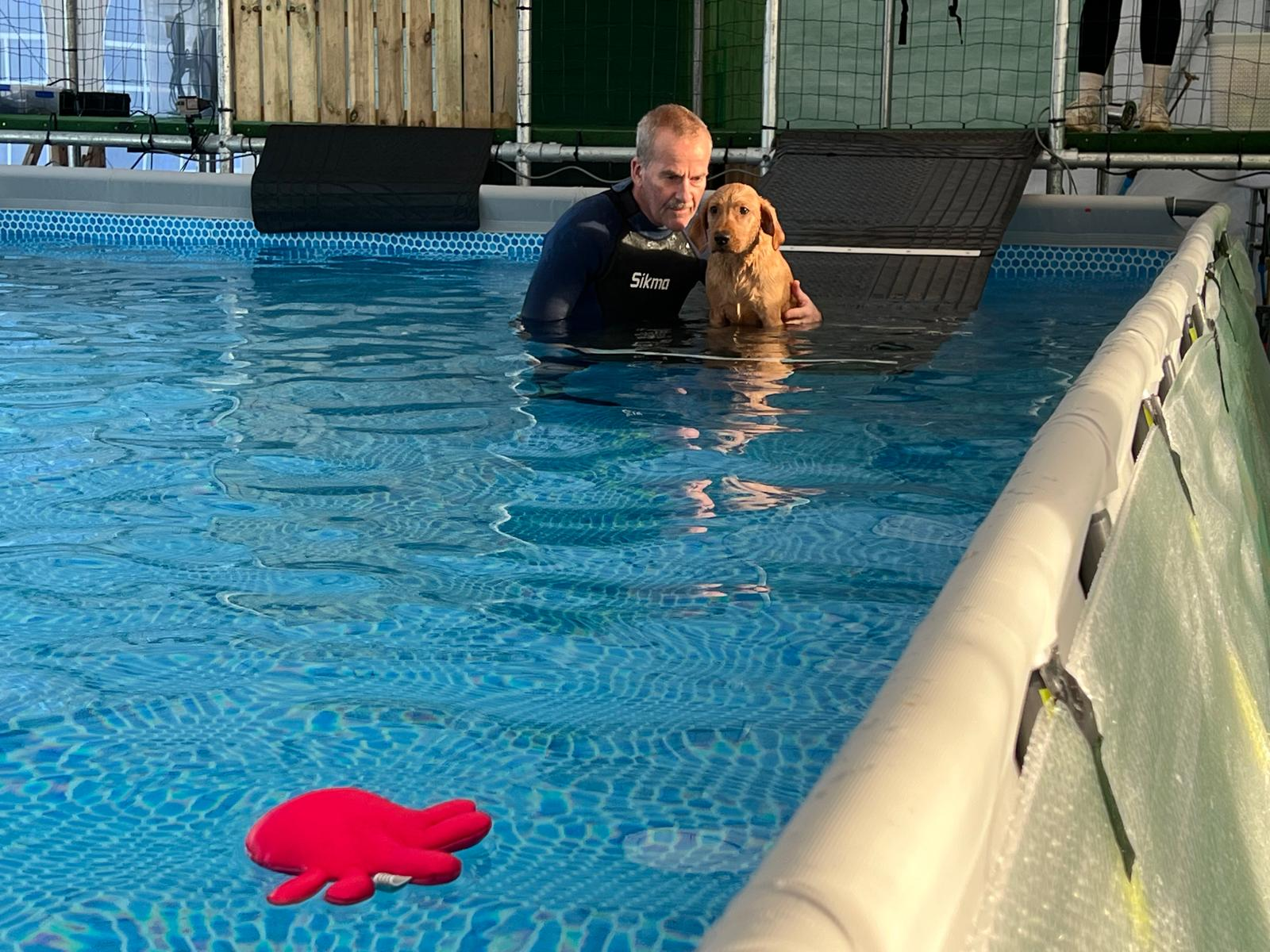
Puppies go in via a ramp, not by being carried or dropped into deep water. This lets them walk forward a paw at a time and retreat if they want to, which is exactly what most puppies need — the choice to go at their own speed rather than being committed to deep water immediately.
It is completely normal for a puppy to stand on the ramp, dip a paw, back off, and try again several times before committing. That hesitation is not a problem to fix quickly; it is part of how puppies build confidence, and rushing it tends to backfire.
- Let the puppy sniff and paw at the water from the ramp before any pressure to go further.
- Use a calm, encouraging voice rather than excited coaxing, which can tip into pressure.
- A favourite toy or a familiar person in the water can help without forcing the pace.
- Never lift a reluctant puppy and place them in the water — it undermines the whole point of letting them choose.
First strokes and short bursts
Once a puppy is paddling, keep the first session short — a few minutes at a time with rests in between, rather than one long continuous swim. Puppies tire quickly, physically and mentally, and a session that ends while they are still enjoying it builds far more enthusiasm for next time than one that runs until they are exhausted or overwhelmed.
A fitted buoyancy aid is useful for puppies too, giving them extra support while their swimming muscles and coordination are still developing.
Owner In Pool with a puppy
Many owners choose to get in the water themselves for a puppy's early sessions, which is exactly what our Owner In Pool option is for at £35 per 30-minute slot. Having a familiar person right there in the water often makes the difference for a puppy who is unsure — they take confidence from you rather than a stranger.
After the swim
A thorough towel-down and hair-dryer session follows every swim, which matters even more for a puppy who cannot yet regulate their body temperature as efficiently as an adult dog. Ears are dried too, and most puppies are ready for a good sleep once they get home.
Common questions
What age can a puppy start swimming?
This depends on your puppy's vaccination status and general development, so check with your vet first and let us know their age and vaccination stage when you book.
What if my puppy is scared of the water?
That is normal and nothing is forced. The ramp entry lets a nervous puppy approach at their own pace, and short, positive first sessions build confidence over time rather than in one go.
Should I get in the pool with my puppy?
Many owners do, and it often helps a nervous puppy considerably. Book Owner In Pool if you would like to be in the water with them.
How long should a puppy's first swim be?
Short — a few minutes of actual paddling broken up with rests, well within the private 30-minute slot. Ending on a positive note matters more than length.
Is a buoyancy aid necessary for a puppy?
It is not compulsory but is often useful, giving extra support while a puppy's coordination and stamina are still developing. We fit them as needed at no extra cost.
Book your puppy's first swim
Tell us your puppy's age and temperament and we'll plan a gentle, unpressured first session.
What Happens Next?
- 1. We review your enquiry
- 2. We call or text to confirm
- 3. Bring your dog and a towel!
Related guides
Puppies and swimming
For owners of puppies wondering when and how to introduce water.
PreparationNervous dogs and water
For owners of dogs who are frightened of, or unsure about, water.
ProcessYour first session, step by step
For owners who have booked, or are about to, and want to know exactly how the session runs.