Swimming For Anxious Or Nervous Dogs
For owners of anxious or nervous dogs wondering whether a swimming session could suit their dog.
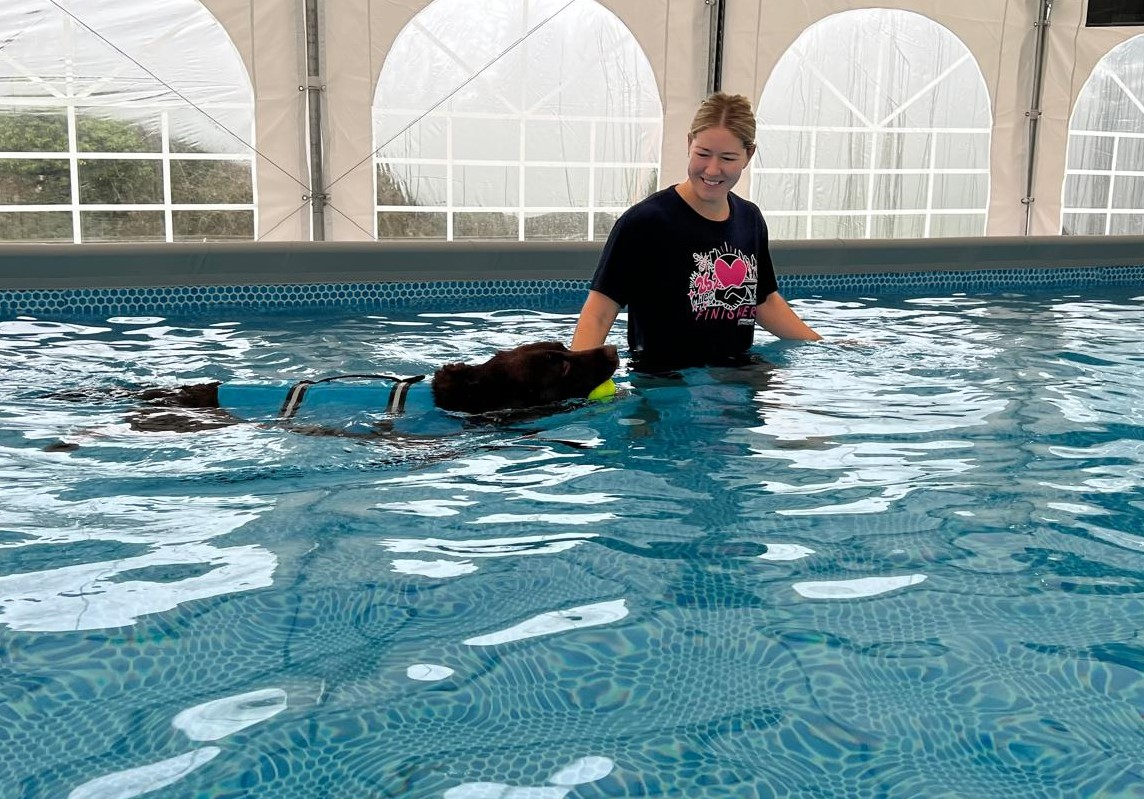
An anxious dog doesn't need a bigger challenge, it needs a calmer environment — and for some dogs, the right pool setting can offer exactly that. No pavement noise, no passing dogs pulling on their lead, no strangers approaching to say hello uninvited. Just a private room, warm water, and time.
That said, swimming isn't automatically calming for every anxious dog, and some find new environments and water itself stressful rather than soothing. This guide is about setting realistic expectations, describing how we run sessions to reduce pressure, and helping you judge whether it's worth trying with your own dog.
If your dog has a diagnosed anxiety condition or is on medication that affects their behaviour or temperature regulation, mention this when booking and check with your vet whether swimming is appropriate for them specifically.
Key points
- Sessions are private with no other dogs or audience, which suits many anxious dogs.
- Nothing is forced — dogs go in at their own pace via a ramp, with plenty of time to adjust.
- A calm first visit, even without full submersion, is a good outcome worth building on.
Why some anxious dogs do well with swimming
A lot of everyday anxiety triggers for dogs come from unpredictability — other dogs approaching, unfamiliar people, sudden noises, being crowded in a busy space. A private session removes most of these triggers at once: it's just your dog, you or a coach, and a quiet room.
Warm water can also have a genuinely settling physical effect, since it isn't a sudden cold shock that puts a dog on edge from the first step. Combined with the novelty of an entirely new activity, some anxious dogs find the whole experience surprisingly engaging rather than stressful.
Why it doesn't suit every anxious dog
Some dogs are anxious specifically about water, new environments, or being separated from familiar routines, and for these dogs a first swim can add stress rather than relieve it. It's worth being honest about this before you book, rather than assuming swimming will automatically help.
If your dog shows strong fear responses to new places generally — refusing to leave the car, trembling, trying to escape — it may be worth working on general confidence-building first, ideally with guidance from a behaviourist, before introducing a completely new environment like a pool.
How we structure a session to reduce pressure
We take a few minutes before your dog even enters the pool room to talk through their history and specific triggers, so we know what to expect and how to adjust our approach on the day.
Entry is via a ramp rather than being lifted or lowered in, which lets a dog approach the water a paw at a time and retreat if they want to. Nothing is timed against them — standing on the ramp working up courage counts as valid use of the session, not wasted time.
The role of buoyancy aids and support
A properly fitted buoyancy aid can make a real difference to a nervous dog's confidence in water, since it reduces the physical effort of staying afloat and gives them one less thing to worry about while they're adjusting to the new sensation of swimming.
For an anxious dog, we'd generally recommend Owner In Pool or Swim Coach over Group Classes, since both put a single familiar or calm, steady presence directly in the water with your dog rather than introducing other dogs into the mix on a first visit.
What a good first session looks like
Success on a first visit doesn't have to mean a full, confident swim. For a genuinely anxious dog, a calm arrival, some time exploring the ramp and shallow water at their own pace, and leaving without a stress response is a solid foundation to build on.
Owners sometimes arrive expecting either total refusal or instant enjoyment, and are surprised to find the reality sits somewhere in between — curious hesitation, gradual settling, and small steps forward. That's a completely normal pattern and nothing to worry about.
Building confidence over repeat visits
If a first session goes reasonably well, a repeated, low-pressure pattern of visits — rather than one intensive session — tends to build confidence more reliably. Dogs often relax noticeably by their second or third visit simply because the environment is no longer completely unfamiliar.
There's no need to rush progress. A dog who only paddles in shallow water for several sessions before properly swimming has still made real progress, and pushing too hard too soon can undo that gradual trust-building.
Talking to us before you book
A quick phone call beforehand lets us understand your dog's specific triggers and plan the session accordingly, whether that's extra time before entering the water, avoiding sudden movements, or simply knowing not to make a fuss of them if that overwhelms rather than reassures them.
We would rather know in advance that your dog is anxious than discover it once you've arrived — it lets us set the whole session up around what will actually help your dog, not just what works for a typical first-timer.
Common questions
Will swimming cure my dog's anxiety?
We can't make that claim. Swimming may offer a calm, private environment that suits some anxious dogs well, but it isn't a treatment for anxiety and won't suit every dog.
What if my dog refuses to get in the water at all?
Nothing is forced. A session where your dog explores the ramp and shallow water at their own pace, without full submersion, is still a valid and useful outcome for a nervous dog.
Should I get in the pool with my anxious dog?
Many owners find Owner In Pool reassuring for a nervous dog, since a familiar person nearby in the water can help. Swim Coach is a good alternative if you'd rather stay poolside.
Is a group session a good idea for an anxious dog?
Generally we'd suggest starting with a private Owner In Pool or Swim Coach session rather than Group Classes, to avoid adding other dogs into an already new experience.
How many sessions before my dog settles in?
It varies by dog, but a steady pattern of repeat visits tends to build confidence more reliably than a single one-off session. Some dogs settle by their second or third visit.
Book a calm, private session for your dog
Tell us about your dog's specific triggers when you call 07359 881320, and we'll plan the session around them.
What Happens Next?
- 1. We review your enquiry
- 2. We call or text to confirm
- 3. Bring your dog and a towel!
Related guides
Nervous dogs and water
For owners of dogs who are frightened of, or unsure about, water.
ProcessYour first session, step by step
For owners who have booked, or are about to, and want to know exactly how the session runs.
PreparationSafety checklist
For owners who want to know the risks and how they are managed.