Swimming A Dog With A Skin Condition
For owners of dogs with skin sensitivities or conditions wondering whether swimming is suitable.
Skin conditions in dogs range from mild seasonal itchiness to ongoing conditions managed long-term with your vet. Understandably, owners in this position often wonder whether swimming will help, make no difference, or cause a flare-up — and the honest answer is that it depends entirely on the individual dog and condition.
We are not vets and cannot advise on treatment or diagnosis, but we can tell you what matters practically around swimming with a skin condition: hygiene, drying, and communication with us before you book. This guide sets out what to think about and, crucially, why vet clearance should always come first.
If your dog has an active skin infection, open sores, or a condition your vet has said should avoid water, please get specific advice before booking — some conditions are made worse by swimming even in clean, warm water, and only your vet can assess that for your individual dog.
Key points
- Always get vet clearance before swimming a dog with an active or diagnosed skin condition.
- Thorough drying afterwards matters more for dogs prone to skin issues than for any other dog.
- Tell us about any skin condition when booking so we can plan the session appropriately.
Why vet clearance comes first
Skin conditions vary enormously — a dog with mild, well-controlled seasonal allergies is a very different case to a dog with an active bacterial infection or open lesions. Only your vet, who knows the specific diagnosis and its current state, can say whether swimming is appropriate right now.
This isn't a formality to skip. Some skin conditions can be aggravated by prolonged water exposure or by moisture trapped against the skin afterwards, while others are entirely unaffected. Get this checked before you book, and bring any relevant vet notes with you.
What we do about water hygiene
Pool water quality matters for every dog that swims, and particularly for a dog whose skin is already sensitive or compromised. We maintain our indoor pool with that in mind, and are happy to answer specific questions about water treatment when you call to book.
If your dog has a known sensitivity to a particular product or chemical, mention it when you enquire so we can talk it through together before your visit.
Drying matters more than usual
For most dogs, a good towel-down and a few minutes with the hair-dryer is about comfort. For a dog with a skin condition, thorough drying — particularly in skin folds, between toes, and around the ears — can be genuinely important, since damp skin left untreated is more prone to irritation than dry skin.
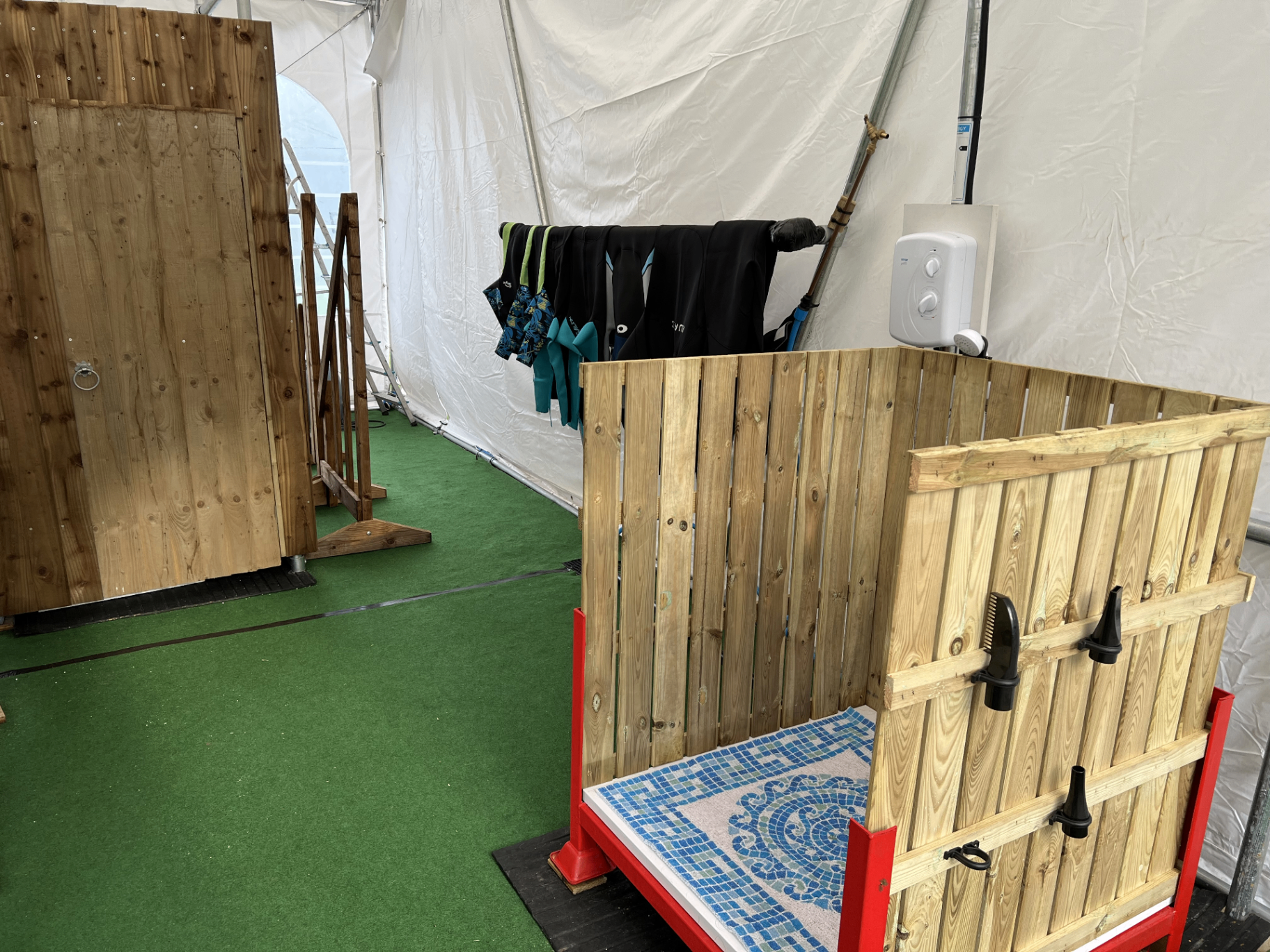
Every session at our pool includes a proper towel-down and hair-dryer time before you head home, but if your dog needs extra attention to a particular area, tell our team so we can spend more time there.
Telling us what we need to know before you book
A quick conversation before your session lets us plan around your dog's needs rather than finding out once you've arrived. This is especially useful for skin conditions, where the right approach can vary a lot between dogs.
- The diagnosis, if you have one, and how long it's been managed.
- Whether your vet has cleared swimming specifically, and any conditions attached.
- Any products or medicated shampoos currently in use.
- Areas that need particular care when drying.
- Whether the condition is currently flared up or settled.
When swimming might not be the right choice right now
If your dog currently has open sores, a weeping infection, or a flare-up your vet is actively treating, it's usually best to wait until things have settled and your vet confirms swimming is appropriate again. Pushing ahead during an active flare risks discomfort for your dog and potential irritation from water exposure.
This is a case where patience pays off — a short delay to let skin heal properly, confirmed by your vet, means a more comfortable and worthwhile session once you do come.
What owners often notice after clearance to swim
Once a vet has confirmed swimming is suitable, many owners find their dog enjoys the exercise and the change of routine just as much as any other dog would, with no different experience in the water itself.
We are not able to make any claims about swimming improving skin conditions, and would never suggest it as a treatment — it is exercise and enrichment, nothing more, and any question about whether it helps a specific condition belongs with your vet.
Aftercare at home
Beyond the towel-down and hair-dryer here, keep an eye on your dog's skin over the following day or two, particularly if this is a first swim since a skin condition was diagnosed. Any new redness, irritation or scratching should go back to your vet promptly so they can assess whether it's related.
Routine coat and skin checks after swimming are a sensible habit for any dog, but worth doing more carefully if your dog has a history of skin sensitivity.
Common questions
Can my dog swim with a skin condition?
It depends entirely on the specific condition and its current state — always get vet clearance first, and let us know the details before you book.
Will pool water make my dog's skin worse?
We can't say for an individual dog — that's a question for your vet, who knows the diagnosis. We can tell you about our water hygiene and drying process if that helps their assessment.
Does drying matter more for dogs with skin conditions?
Thorough drying is good practice for every dog, but it can matter more for a dog whose skin is already sensitive. Every session includes a towel-down and hair-dryer, and we can give extra attention to specific areas if you ask.
What should I tell you before booking if my dog has a skin condition?
The diagnosis, whether your vet has cleared swimming, any medicated products in use, and whether the condition is currently flared up or settled.
Can swimming treat or improve a skin condition?
We don't make treatment claims of any kind. Swimming here is exercise and enrichment; any question about therapeutic benefit for a specific condition should go to your vet.
Have a chat with us before you book
Call 07359 881320 to talk through your dog's skin condition and vet clearance before your first session.
What Happens Next?
- 1. We review your enquiry
- 2. We call or text to confirm
- 3. Bring your dog and a towel!
Related guides
Aftercare and drying
For owners wanting to look after their dog properly between sessions.
PreparationSafety checklist
For owners who want to know the risks and how they are managed.
ProcessHow hydrotherapy works
For owners who have heard the term and want a clear, jargon-free explanation.