Dog Swimming In Winter
For owners wondering whether cold weather rules out swimming, or how to keep a dog warm before and after.
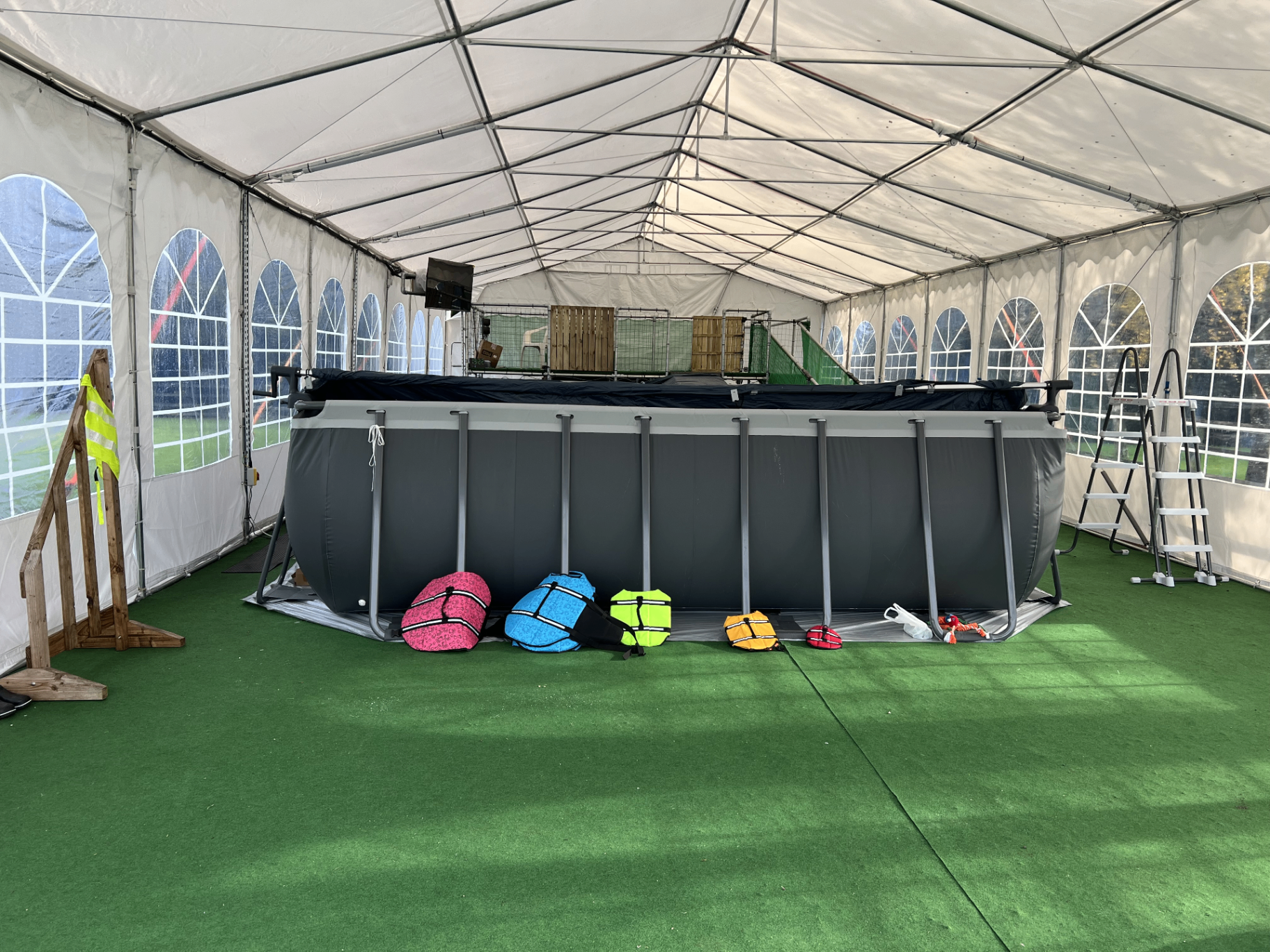
As the nights draw in and the fields turn to mud, dog walks get shorter and muddier, and a lot of owners assume swimming is off the table too. It isn't. Our pool is indoors, under a marquee, and the water sits between 28 and 32°C whatever the temperature is doing outside — so a January session feels much the same to your dog as a July one.
What does change in winter is everything around the water: how your dog copes with the drive home, how quickly they dry, and how much exercise they are missing from shorter walks. This guide covers what to expect from a winter swim and how to manage the bits outside the pool room.
None of this requires special kit or a change to how you book. It is mostly about timing the visit, drying properly, and using the pool to make up for the exercise a cold, dark month takes away from a normal routine.
Key points
- The pool water is heated to 28–32°C all year, so winter sessions are no colder than summer ones.
- A full towel-down and hair-dryer session before you leave means your dog is not going out into the cold wet.
- Swimming is a useful way to keep an active dog exercised when short, dark, muddy walks aren't enough.
Why the pool doesn't care about the season
The pool sits inside an indoor marquee, so it is sheltered from wind, rain and frost, and the water itself is heated and held between 28 and 32°C regardless of what the thermometer outside is doing. A dog stepping onto the ramp in December is stepping into the same warm water as a dog in June.
This matters because cold water is one of the main reasons owners avoid open water or unheated pools over winter — the shock of cold water can put a nervous dog off swimming altogether, and it does nothing for a dog with stiff joints. Heated water removes that variable entirely, which is one of the reasons hydrotherapy pools are used year-round rather than seasonally.
The bit that actually changes: getting home warm and dry
The part of a winter swim that needs a bit more thought isn't the pool, it's the ten minutes either side of it. A wet dog stepping out into a cold car park is far more likely to feel the chill than a wet dog stepping out in August, so the towel-down and hair-dryer we do after every session matters more in winter, not less.
We dry thoroughly, including ears, before you leave, so your dog is going back into a cold car warm rather than damp. If your dog has a coat or fleece for the journey home, winter is the time to use it, particularly for short-coated breeds, older dogs, or anything recovering from injury or surgery.
- Bring a dry coat or fleece for the drive home in cold months.
- A towel of your own for the car seat is a sensible extra, even though we dry your dog before you leave.
- Park close if you can — the walk from car to pool room is where a just-dried dog can get chilled again if it's raining.
Using swimming to fill the winter exercise gap
Short daylight hours, icy pavements and endless mud mean a lot of dogs get noticeably less exercise between November and February than they do in summer. For an active, working or high-drive dog, that drop-off shows up quickly as restlessness, weight gain or frustration at home.
A 30-minute swim is a genuine workout regardless of the season, and because it happens indoors it isn't affected by the short, dark, wet days that shrink a normal walking routine. Owners of working breeds in particular often use a winter swim slot to keep a dog's fitness and temperament level through the months when a decent off-lead walk is hard to find daylight for.
Older dogs and winter stiffness
Cold weather tends to make joint stiffness worse in older dogs, and a lot of owners notice their senior dog slowing down more sharply once the temperature drops. Because our water is warm rather than cold, swimming avoids adding to that stiffness the way a cold, wet walk can.
The buoyancy of warm water takes weight off joints while still letting a dog move through a full range of motion, which is why it's often suggested as a way to keep an older or arthritic dog moving through winter without the impact of frozen or slippery ground. As always, check with your vet before starting swimming for a dog with a diagnosed joint condition.
Puppies and first-timers in cold months
There's no reason to wait until spring to start a puppy or nervous dog swimming — the water temperature is identical in January. If anything, an indoor pool session can be a welcome bit of stimulation for a young dog whose usual walks have shrunk with the daylight.
The main winter consideration for a first-timer is simply making sure they're warm and dry before the journey home, since a nervous dog who gets cold on the way back may associate that discomfort with the swim itself rather than the drive.
Booking around winter weather
Because the pool is indoors and heated, we run sessions as normal throughout winter and don't need to cancel for cold snaps the way an outdoor facility might. If icy roads make travel difficult on a particular day, get in touch on 07359 881320 and we'll happily move your slot rather than have you drive in poor conditions.
Common questions
Is the pool water colder in winter?
No. The water is heated and kept between 28 and 32°C all year round, so winter sessions feel the same as summer ones.
Will my dog get cold on the way home after swimming?
We towel-dry and hair-dry your dog thoroughly before you leave. Bringing a coat or fleece for the car journey is a sensible extra step in cold months.
Is it worth swimming a dog through winter if walks are shorter?
Yes — a 30-minute swim is a genuine workout that isn't affected by short daylight, ice or mud, which makes it a useful way to maintain fitness through winter.
Do you close for bad weather?
The pool is indoors under cover, so we run as normal through cold weather. If travel is difficult where you are, call 07359 881320 and we'll move your slot.
Is winter a good time to start a nervous dog swimming?
Yes — the water is exactly as warm as it is in summer. Just plan to get your dog warm and dry quickly afterwards so the cold outside doesn't become part of their first impression.
Keep swimming through the colder months
The pool is warm all year — book a winter slot and we'll have your dog dried and toasty before you head home.
What Happens Next?
- 1. We review your enquiry
- 2. We call or text to confirm
- 3. Bring your dog and a towel!
Related guides
Your first session, step by step
For owners who have booked, or are about to, and want to know exactly how the session runs.
Use caseSenior dog fitness
For owners of older dogs looking for gentler ways to maintain fitness and mobility.
ProcessAftercare and drying
For owners wanting to look after their dog properly between sessions.