Keeping A Senior Dog Fit Without Overdoing It
For owners of older dogs looking for gentler ways to maintain fitness and mobility.
As dogs age, the same walk that was easy at five can leave them stiff at eleven. Owners often notice this gradually — a slower pace, more reluctance to jump in the car, longer naps after exercise — before deciding something needs to change.
The instinct is often to simply do less, but under-exercising an older dog can accelerate muscle loss and stiffness just as much as overdoing it can cause soreness. The better approach is usually to swap high-impact activity for lower-impact alternatives that keep muscles working without jarring ageing joints.
This guide looks at practical ways to keep a senior dog moving well, including where warm-water swimming fits in, and when to involve your vet before changing your dog's routine. Always get vet clearance before starting new exercise for a dog with a diagnosed condition or following any recent illness or surgery.
Key points
- Low-impact exercise, including swimming, works muscles without jarring ageing joints.
- Watch for slowing down, stiffness after rest, and reluctance to jump as signs to adjust routine.
- Always get vet clearance before starting a new exercise plan for an older dog.
Why fitness still matters in older dogs
Muscle supports joints. When a senior dog becomes less active, muscle mass drops, and the joints that muscle used to protect come under more direct strain — which can create a downward spiral where a dog moves less because it hurts, and hurts more because it moves less.
Keeping a senior dog appropriately active, in a way that suits their body rather than their younger self, helps maintain the muscle that keeps them mobile and comfortable day to day.
Signs it's time to adjust your dog's routine
Owners often adjust too late, waiting for a dramatic limp rather than noticing the smaller signs that build up beforehand.
- Slower to get going after resting, particularly first thing in the morning.
- Reluctance to jump into the car or up onto furniture.
- Shorter walks tolerated than a year or two before.
- Stiffness that eases once they've been moving for a few minutes.
- Visible muscle loss over the hindquarters or back.
Why swimming suits ageing joints
Water supports a dog's body weight, taking pressure off hips, knees and elbows while still letting the muscles around those joints do real work. This makes swimming one of the few exercises that can maintain fitness without the repeated impact of paws hitting pavement.
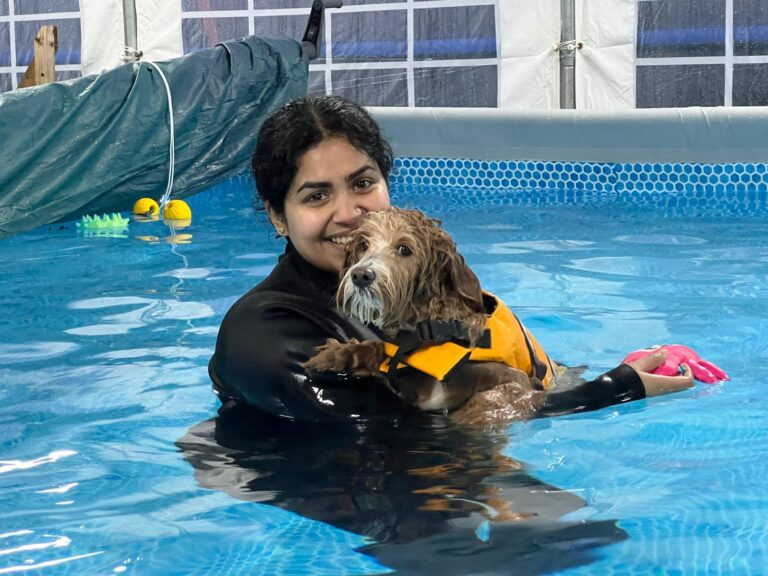
A private 30-minute session in water kept at 28–32°C means an older dog isn't shocked by cold water on entry, which matters — cold water tightens muscles that may already be stiff, while warm water helps them work more freely.
Building a sustainable routine
Consistency matters more than intensity for older dogs. A dog swimming fortnightly on an ongoing basis generally does better than one taken for a single intensive session then left for months.
Start gently and let your dog's response guide the pace — some tiredness after a swim is normal, but a dog who is markedly stiffer the next day may need more rest between sessions or a shorter time in the water. Our Owner In Pool option lets you stay close and read your dog's comfort level directly, which many owners of senior dogs prefer.
Combining swimming with other gentle exercise
Swimming works well alongside, not instead of, other low-impact activity. Short, flat, unhurried walks on familiar ground keep a dog engaged with their usual routine without the strain of long or hilly outings.
Avoid activities that involve sudden twisting or jumping, such as fetch on hard ground or off-lead scrambling over uneven terrain, if your dog is showing signs of joint stiffness. These movements put concentrated stress through joints that no longer recover as quickly as they once did.
Weight and joint strain
Extra weight multiplies the load on every joint with every step, and senior dogs are prone to gaining weight as their activity naturally reduces. Even a modest weight gain can noticeably increase stiffness in an older dog.
Our Weighty Woofers sessions combine swimming with a free weigh-in at every visit, which gives you a simple way to track whether weight is creeping up before it becomes a bigger problem for ageing joints.
When to involve your vet
Any sudden change in mobility, a limp that doesn't ease, or reluctance to bear weight on a leg should go to your vet before you try to exercise through it. Existing diagnosed conditions such as arthritis or hip dysplasia also need vet input on what exercise is appropriate.
Once you have vet clearance, tell us about any diagnosis or restriction when you book so we can tailor the session accordingly — for example, favouring shorter bursts with more rest, or avoiding certain movements altogether.
Common questions
Is swimming safe for a very old dog?
Often yes, and it can be gentler than walking because the water supports body weight — but get vet clearance first, especially if your dog has a heart condition, recent illness or diagnosed joint disease.
How often should a senior dog swim?
There's no fixed answer, but a consistent fortnightly or monthly rhythm tends to suit older dogs better than a single intensive block. Watch how your dog recovers and adjust from there.
Will swimming replace my dog's daily walks?
No — swimming works well alongside short, gentle walks rather than instead of all other exercise. Both play a different role in keeping muscles and joints healthy.
My senior dog has never swum before — is it too late to start?
Many dogs try swimming for the first time later in life, often on vet advice for joint support. A calm first session on the ramp, at their own pace, is usually all it takes to introduce them gently.
Can swimming help with a stiff senior dog's weight?
It can help as part of a wider plan — swimming burns energy without jarring joints, and our Weighty Woofers sessions include a free weigh-in to track progress alongside the swimming itself.
Help your senior dog stay active and comfortable
Book a gentle, private session and tell us about any joint stiffness or diagnosis beforehand.
What Happens Next?
- 1. We review your enquiry
- 2. We call or text to confirm
- 3. Bring your dog and a towel!
Related guides
Senior dogs
For owners of ageing dogs whose walks are getting shorter.
Use caseExercise for arthritic dogs
For owners of dogs with arthritis looking for lower-impact ways to keep them moving.
Use caseWhy hydrotherapy helps dogs
For owners researching whether warm-water exercise could help their dog.