Swimming For Older Dogs
For owners of ageing dogs whose walks are getting shorter.
Older dogs often want the exercise their bodies no longer make comfortable. Walks shorten, stiffness sets in afterwards, muscle quietly disappears, and the loop tightens.
Warm water changes the equation, because it removes the impact without removing the effort. Here is how senior sessions are run and what to expect.
Key points
- No impact through the joints, but real muscular work.
- Warm water at 28–32°C keeps stiff dogs comfortable.
- Sessions are short, supported and paced to the dog.
Why warm water suits older dogs
Buoyancy carries body weight, so worn joints are not taking load with every stride. Warmth keeps muscles loose rather than guarded. Resistance means even a slow, gentle swim is genuine exercise.
For a dog who cannot manage the walks they used to, that combination often means keeping condition they would otherwise lose.
Preserving muscle matters
Muscle loss in older dogs is quietly damaging: less muscle means less support for the joints, which means more discomfort and less movement again. Swimming lets a dog work the hind limbs and core without the pounding that makes them sore.
How we adapt the session
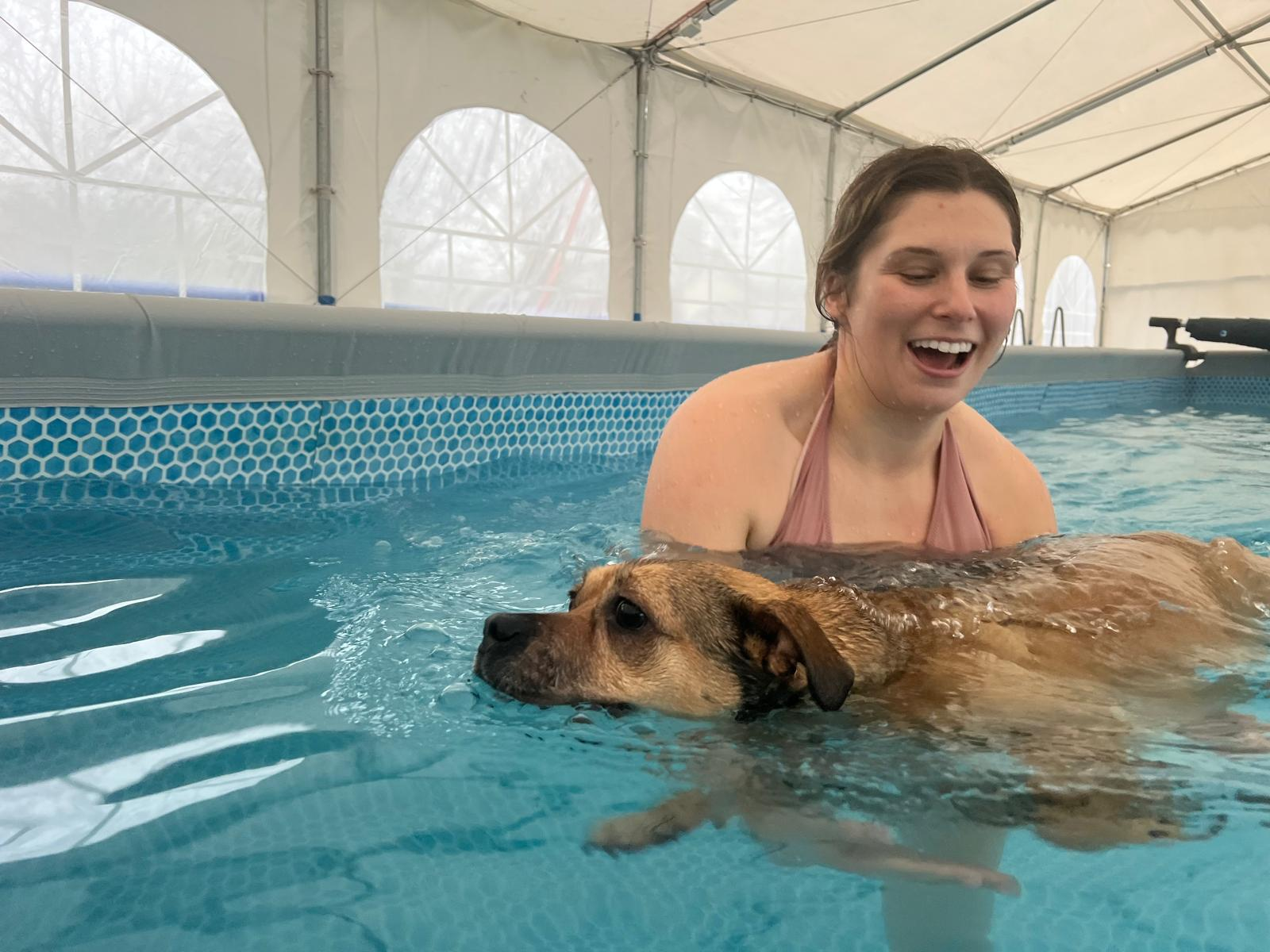
Shorter working intervals, longer rests, a fitted buoyancy aid, and one of our team in the water for support where it helps. We watch closely for tiring and stop before a dog is struggling.
Every dog gets a proper towel-down and hair-dryer afterwards, which matters more for an older dog than a young one — nobody wants a stiff senior travelling home damp.
Check with your vet first
Older dogs more often carry heart, breathing or joint diagnoses that change what is sensible. Speak to your vet before starting, and tell us what they have said.
If your dog has a specific diagnosed condition, our condition guides cover several of them in more detail.
Common questions
Is my dog too old to swim?
Age alone rarely rules it out — health status does. Check with your vet, and tell us about any diagnoses when you book.
How long should an older dog swim for?
The slot is 30 minutes, but water time for a senior dog is broken into short intervals with rests rather than continuous swimming.
Will swimming help with stiffness?
Many owners find gentle warm-water exercise helps their dog move more freely. It supports mobility and muscle condition, but it is not a treatment — your vet manages the underlying condition.
Which session suits a senior dog?
Swim Coach, so there is experienced support in the water throughout and the pace is managed for them.
Book a gentle session
Tell us your dog's age and any conditions, and we'll plan the session around them.
What Happens Next?
- 1. We review your enquiry
- 2. We call or text to confirm
- 3. Bring your dog and a towel!
Related guides
Swimming after surgery
For owners whose dog is recovering from an operation.
ProcessHow many sessions
For owners planning a realistic swimming routine rather than a one-off.
ProcessWeight-loss swimming plan
For owners of overweight dogs who struggle with land-based exercise.