Hydrotherapy vs Dog Swimming: What's The Difference?
For owners told their dog 'needs hydrotherapy' and unsure what to book.
The two terms get used interchangeably online, which causes real confusion when a vet mentions hydrotherapy and an owner books a recreational swim, or the other way round.
This guide sets out what separates them, where the overlap sits, and how to work out which one your dog actually needs.
Key points
- Clinical hydrotherapy is treatment delivered under veterinary direction.
- Recreational swimming is exercise, confidence and fitness, not treatment.
- Both use warm water; the difference is the goal and the oversight.
What clinical hydrotherapy means
Clinical hydrotherapy is structured water-based treatment carried out as part of a veterinary plan, typically after surgery or for a diagnosed orthopaedic or neurological condition. It follows a prescribed protocol, progresses in measured stages and reports back to the referring vet.
It is the right route when a dog is recovering from an operation, has a diagnosis that changes what is safe, or needs a clinician making the calls on load and progression.
What recreational and conditioning swimming means
Recreational swimming is exercise. It builds fitness, burns energy, supports weight loss and grows water confidence, in warm water that is kind to joints. It is not treatment, and it does not replace veterinary advice.
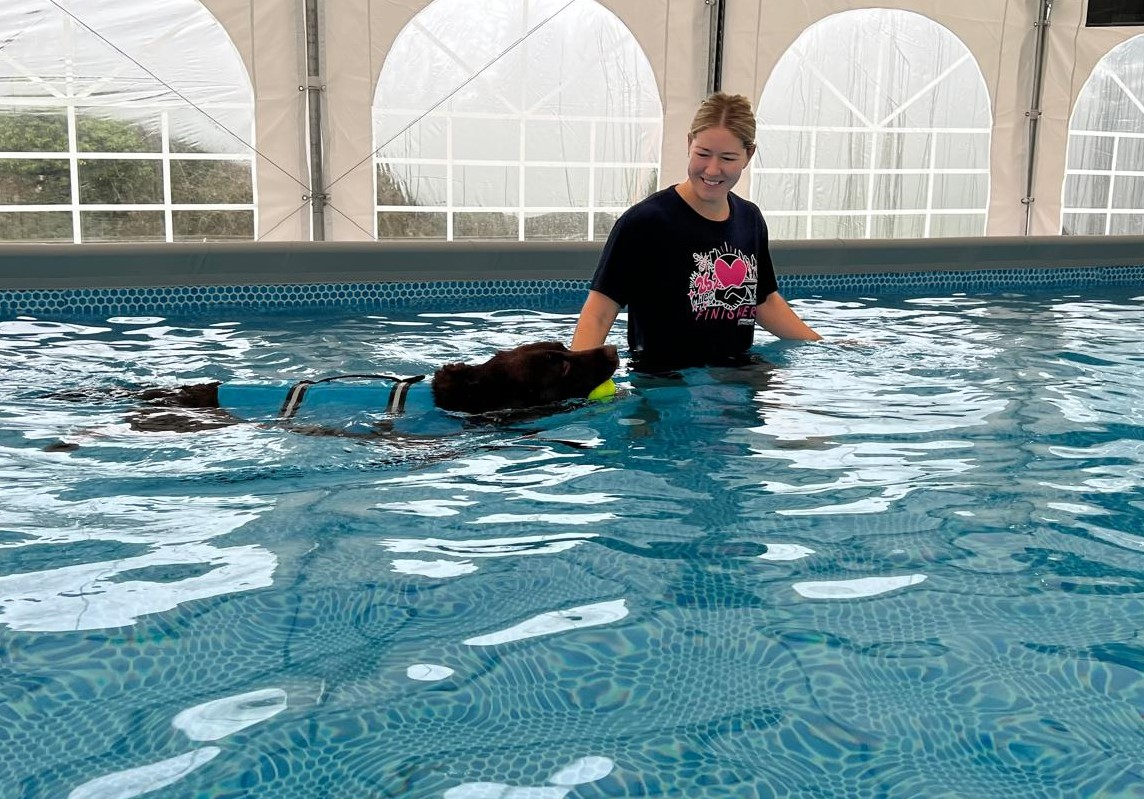
That is what we offer: private 30-minute sessions in a heated indoor pool, with supervision, buoyancy aids and a coach in the water when it helps.
Where the two overlap
The physical mechanism is the same either way. Warm water supports body weight, reduces impact through the joints and provides resistance in every direction, so a dog works muscle without pounding through it.
That is why a dog with arthritis, a weight problem or age-related stiffness often benefits from swimming even when nothing clinical is being prescribed. We ask for vet clearance where a diagnosis or recent surgery is involved, and we will happily work alongside the advice your vet has already given.
Which should you book?
A rough rule of thumb:
- Recent surgery, a fresh diagnosis or an unexplained lameness — speak to your vet first.
- Overweight, unfit, stiff with age, or bursting with energy — a conditioning swim is a good fit.
- Nervous or non-swimming dog — start with a Swim Coach session to build confidence.
- Fit, confident dog who loves water — Owner In Pool or a Group Class.
Common questions
Do I need a vet referral to swim my dog with you?
Not for general fitness, weight loss or fun. We do ask for vet clearance where your dog has had recent surgery or has a diagnosed condition affecting what is safe.
Is swimming a substitute for veterinary treatment?
No. Swimming supports fitness, mobility and weight management, but it does not replace diagnosis or treatment from your vet.
Is the water the same in both?
Warm water is central to both approaches. Ours sits between 28 and 32°C, which keeps muscles relaxed rather than braced against the cold.
Can my dog do both?
Yes — many dogs finish a course of clinical treatment and then keep swimming for ongoing fitness and mobility, with their vet's agreement.
Not sure which your dog needs?
Tell us what your vet has said and what you're hoping to achieve, and we'll be straight with you about whether we're the right fit.
What Happens Next?
- 1. We review your enquiry
- 2. We call or text to confirm
- 3. Bring your dog and a towel!